Problem: A 12kV switchgear cubicle breaker locked out.
Investigation:
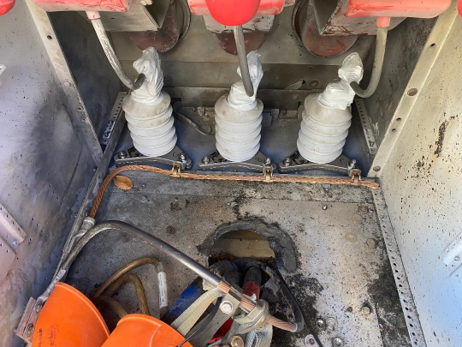
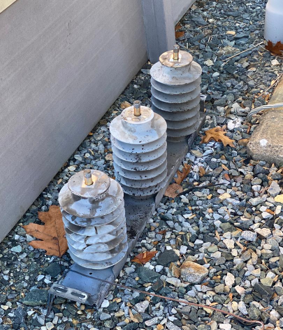
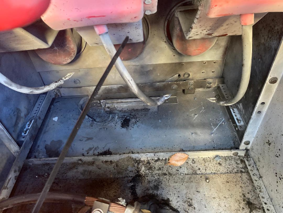
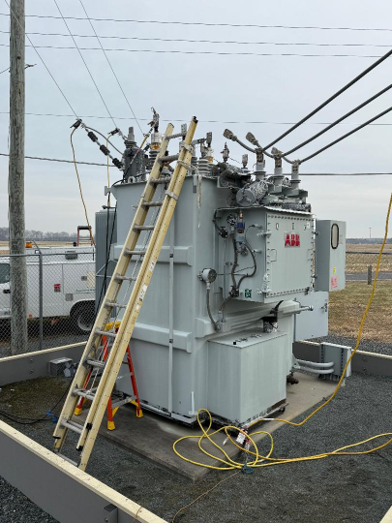
On site inspection revealed the lightning arrestors (LAs) failed in the back of the switchgear. The failure likely occurred due to a 34kV line outside the yard contacting the 12kV line coming out of the switchgear.
Resolution:
New LAs were acquired and were installed to replace those that had failed. Breaker was placed back in service.
Breaker SF6 Leak Repair
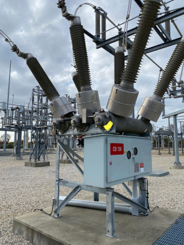
Problem: A low gas alarm was received for a 138kV breaker. Upon arrival on site,crew found gas pressure in the breaker to be a few PSI below normal,causing the breaker to go into alarm. Crew added gas to bring pressure to normal level of operation.
Investigation:
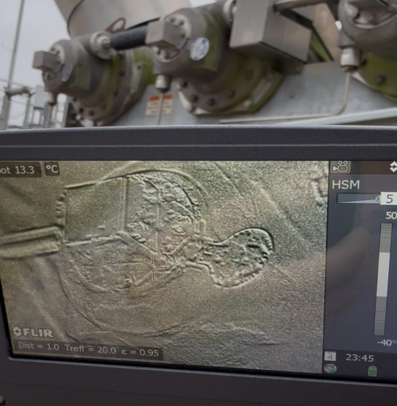
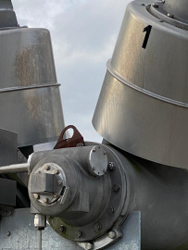
The breaker was scanned using a high-sensitivity imaging camera, which identified a leak on the A-phase pole in the vicinity of the rupture disk.
Resolution:
A scope of work was developed going through the manual, and consulting the equipment manufacturer. The breaker was degassed and the rupture disks, o-rings, and desiccant were all replaced. Bolts were placed back on and tightened to the appropriate torque settings found in the manual. Breaker was re-gassed and placed back in service.
Bushing Replacement
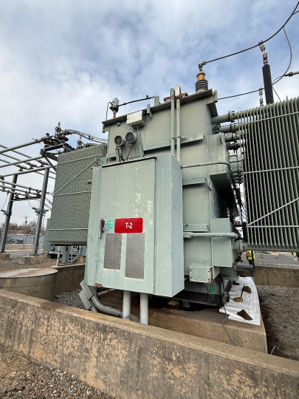
Problem: Upon a routine substation inspection, it was found there was a significant amount of oil leaking down the side of the transformer.
Investigation:
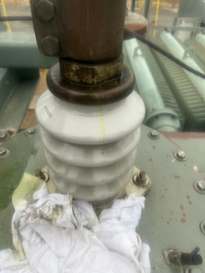
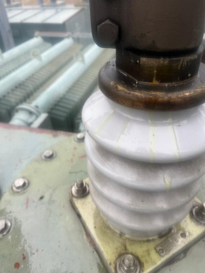
The transformer was taken out of service, and it was found the oil was leaking from the low side (12kV) bushings. The bushings were deemed to have failed due to too much tension.
Resolution:
Replacement low side bushings were acquired. The transformer was drained due to the bushings being bottom connected, and the new bushings were installed. A full PM was performed on the transformer with all tests displaying acceptable results. Transformer was placed back in service without interruption.
Hotspot
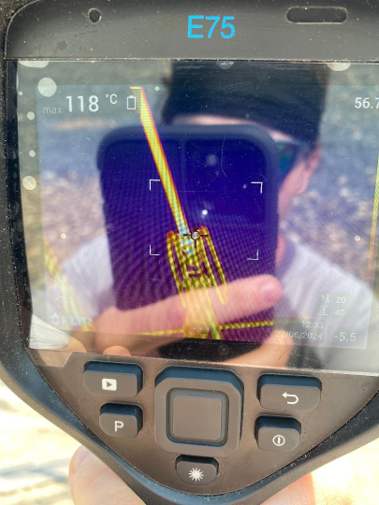
Problem: During a routine IR scan of a substation, a hotspot was found reading 118 degrees Celsius in the jaw of a disconnect switch.
Investigation:
Upon taking the disconnect switch out of service, it was found the fingers in the jaw of the switch were melting and corroded.
Resolution:
The jaw of the hotspot was thoroughly cleaned, and a welding contractor filled in the corroded parts of the jaw.
Transformer Preventive Maintenance
Problem: Routine PM performed on transformer.
Investigation:
The transformer was tested using Doble equipment, testing overalls, C1s, C2s, TTR, insulation resistance, and excitation.
Resolution:
All results were reviewed and found satisfactory. The transformer was approved to be returned to service.
Vegetation Growth
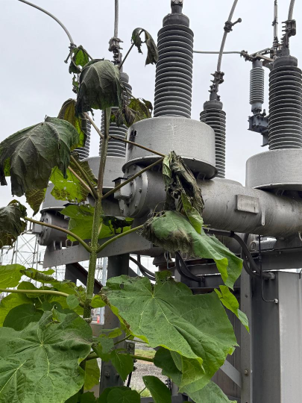
Problem: A 69kV breaker tripped out.
Investigation:
Upon arrival on site, it was found a large weed grew into the vicinity of the breaker, making contact with the primary. An arc flash occurred between the primary to the CT covers.
Resolution:
A full preventive maintenance testing procedure was performed on the breaker. Aside from the visible damage to the CT covers, no issues were identified that would affect normal operation. Temporary repairs were made to the two damaged CT covers pending the arrival and installation of new covers. The breaker was then returned to service.
Factory Acceptance Testing
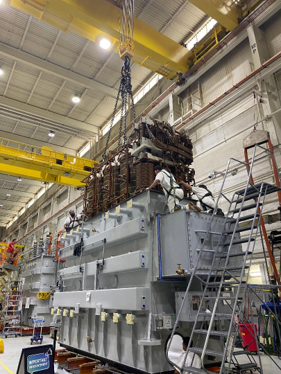
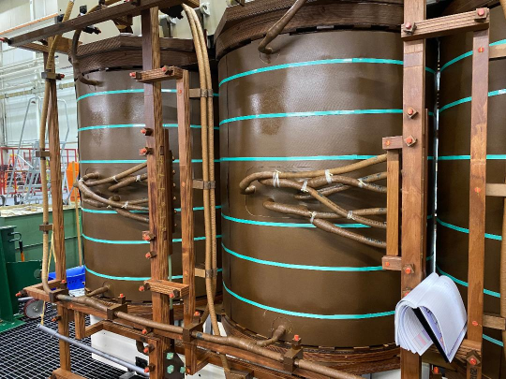
Problem: Witnessed testing and placement of a core and coil for a new transformer
Investigation:
Witnessed coil height measurements performed both before and after installation of the coil into the transformer. Oversaw the placement of the core and coil assembly into the transformer.
Resolution:
Observed the core and coil assembly being transported from the factory floor and installed into the main transformer tank.
PRD Microswitch and Cable Replacement
Problem: A high priority alarm was received on a transformer
Investigation:
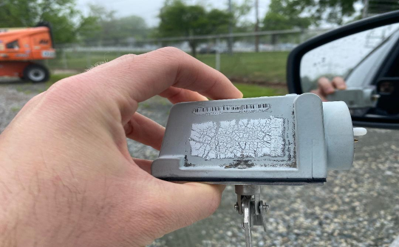
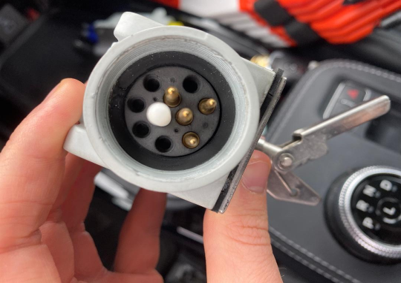
Upon arrival on site, the crew isolated the equipment using the knife switch and determined that the alarm was associated with a pressure relief device (PRD). The area was inspected, and the PRD’s yellow flag remained in the down position, indicating that no pressure release had occurred. The nitrogen gauge was checked and found to be within acceptable range at 2.0 PSI.
Resolution:
Given that the PRD did not actuate and system pressure was within the normal operating range, it was determined that moisture intrusion into the PRD microswitch caused a false alarm. The PRD microswitch and associated cable were replaced, the alarm was cleared, and the issue was resolved.